Success and happiness: which came first?

May 11, 2009

I have heard and read about this question quite a few times, without getting a very clear answer, though.
Probably, this is because the question as such does not really address the core of the issue it wants to raise.
In my view, both success and happiness originate from the same, and grow in a very similar way.
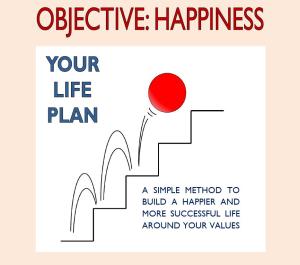
In order to be successful and happy, you must start with shaping your life around your core values, and not around those that your environment imposes on you. Only by doing so, you will be able to choose and develop activities that, both professionally and personally, can bring the fulfillment and the enthusiasm that are required in any successful endeavor.

j0395782[1]

Success can be a rather difficult concept to formalize, as its definition depends greatly on what you consider important for you in life. For some, this will be making lots of money, for others it will mean have a family, it also could be gaining a position of power or reach a certain social status; it could be becoming famous, and so on.
If you try to eliminate the subjectivity that goes together with the variety of values, a good definition of success that I have heard is that “success is to bring what you start to its completion”. I personally like this definition, because it describes very well the whole process that is necessary to reach the required satisfaction to feel successful.
What, to me, reinforces my conviction that success and happiness go in parallel is that you can write the same paragraph above, just by replacing success by happiness and the text will make just as much sense.
It is quite difficult to try to see a relation of cause and effect between the two concepts. Indeed, if you are not happy, can you feel successful? In the same line of thought, can you feel happy if you are not successful? You probably cannot.
Next to engaging in activities that match your values and working on bringing them to completion, a very important aspect for both success and happiness is to get others involved as well. Never hesitate to ask for help, for support and for feedback. You will never have enough of those. Other people’s input is very valuable to stay motivated and determined, as well as to avoid losing track.
A great way of increasing your level of happiness and success in life is to first envision what the ideal world would be. What would you do if you were the one who could make things “perfect” for yourself? Once you have defined this ideal world, you can start developing your own plan. Although in some cases, a drastic change could work, I would recommend having a step-by-step approach, as a drastic change all of a sudden could bring a lot of uncertainty and chances of failure that not everyone can handle. Set your targets to go from point A (where you are today) to point B (your ideal world). Define each step clearly and set realistic and rigorous timelines to this plan. Timelines are quite important because they will force you to keep taking action. Not doing so will always end up in inaction, because we are all very good and finding excuses to postpone what we prefer not to do. Another important part in the execution of this plan is to designate someone (friend, coach, family member, etc…) to remind you, to enforce these timelines and if needed to reprimand you, because there again, if you can get away with procrastination, chances are that you will indeed.
To sum up, the way to happiness and success requires the following: build your life around your values and choose the environment in which they can flourish. Have a plan to improve your level of fulfillment. Share the enthusiasm with others. Celebrate every success along the way. Do not forget to ask for assistance to make sure that you will not divert and give up on your plan.
This last point is actually quite important: many people feel unhappy because they have given up on their dreams.

Copyright 2009 The Happy Future Group Consulting Ltd.


Too old to change. Or was he really?

May 11, 2009

As the Sales Director of the poultry plant, I also was managing our sales office in Germany.
The problem with that unit was that it had not generated any new significant customer for years, and as we were growing aggressively, we needed to grow in Germany as well as we were in our other markets.
Many discussions and meetings further, I came to the conclusion that the German sales office was simply useless and that we should sell to the German customers directly from our plants in The Netherlands and in Belgium.
Of course, this was a very bumpy situation. My superiors trusted my judgment, but were quite afraid of losing business in Germany (our largest market), which the General Manager of the sales office was of course not missing to tell them over and over. After all his job was on the line…
Anyway, the decision to shut the sales office was made and we had to figure out the next step.
Most customers were very old relationships, and this was important to take that into account when deciding who to appoint as the sales person for Germany. From the whole office in Germany, we decided that we should keep only one person for sales, the nine other employees would go.
There were two inside sales persons, and two sales reps. Quickly, the two inside sales persons did not make the cut and were eliminated. The 2 sales reps were very different. One was a young fellow, quite aggressive, well-connected and able to move large volumes, although quite a bit of a loose cannon, and with the tendency to yield to the customers when it came to price. Lots of volume but not much margin.
The other sales rep was in his early 50’s, a very good relationship manager, but with no track record of developing new accounts for a long time. General opinion was that he would get good prices but low volumes. General thinking was also that he was to old to change and adapt to the new strategy, and would be useless to the organization.
Yet, I chose the latter sales person, even though I shared the same worries as everyone else, but I knew one thing: he would listen and do as told, and he would bring a sense of continuity and trust to the existing customers.
We decided to keep him, and I would spend quite some time in Germany with him, visit all existing customers and accompany him in some new prospecting activities.
I presented him the sales plan, the objectives and the timelines and there we went. He simply became the best salesman we had. From a very apathetic and almost unproductive salesman, he turned into a dynamic, entrepreneurial and enthusiastic representative that brought new business, and lots of it. In the first year, our sales grew in Germany by 24%, while the industry average was only 2%. His performance was stimulating the other sales people, including me, to perform better in their respective markets.
He was not too old. He just had lost passion, because he had no clear idea of what was expected from him. In the new structure, this changed, and then he could do what he was good at: selling! And he did a great job, because by then he had become happy at work!

Copyright 2009 The Happy Future Group Consulting Ltd.


The hopeless rude guy from Planning

May 11, 2009

When I became Sales Director of the poultry processing plant, I also supervised the Inside Sales/Planning/Logistics Department.
One of the employee of that department was causing quite a few conflicts with the Production Department, mostly because of very poor communication skills. Requests sounded more like barking and politeness was a scarce commodity from his side.
That problem probably should have been addressed a long time ago, but OK, I had to deal with it now.
All I got was criticism about his conduct and “fire him!” kind of advice. Yet, he had many years of experience and had quite a lot of knowledge. That bothered me to just take the short cut and let him go.
So, I had a meeting first with him alone and later with his supervisor. In the first meeting, I addressed the problems and made him clear that I wanted to understand what caused him to act the way he did. With his supervisor, we reviewed his job description and analyzed what he liked and what he did not like about his tasks.
And bingo! We discovered that he felt very uncomfortable dealing with foreign customers having to speak in languages he did not master. The stress of the phone ringing and hear someone speaking German or English was just too much for him and he reacted his stress on his colleagues.
We decided to remove the customer contact from him, allocate that to another employee who actually enjoyed the sales side more than the production side, and dedicate our difficult friend more to the technical and planning side of production. Within days, I was receiving positive feedback from production people who were wondering what I had done to him, because now he was such a pleasure to work with.
And for him, as he was in his late 40’s, we also avoided a painful layoff that might have had severe personal consequences.
He was now doing what he liked and what he was best at. And he became very happy at work!

Copyright 2009 The Happy Future Group Consulting Ltd.